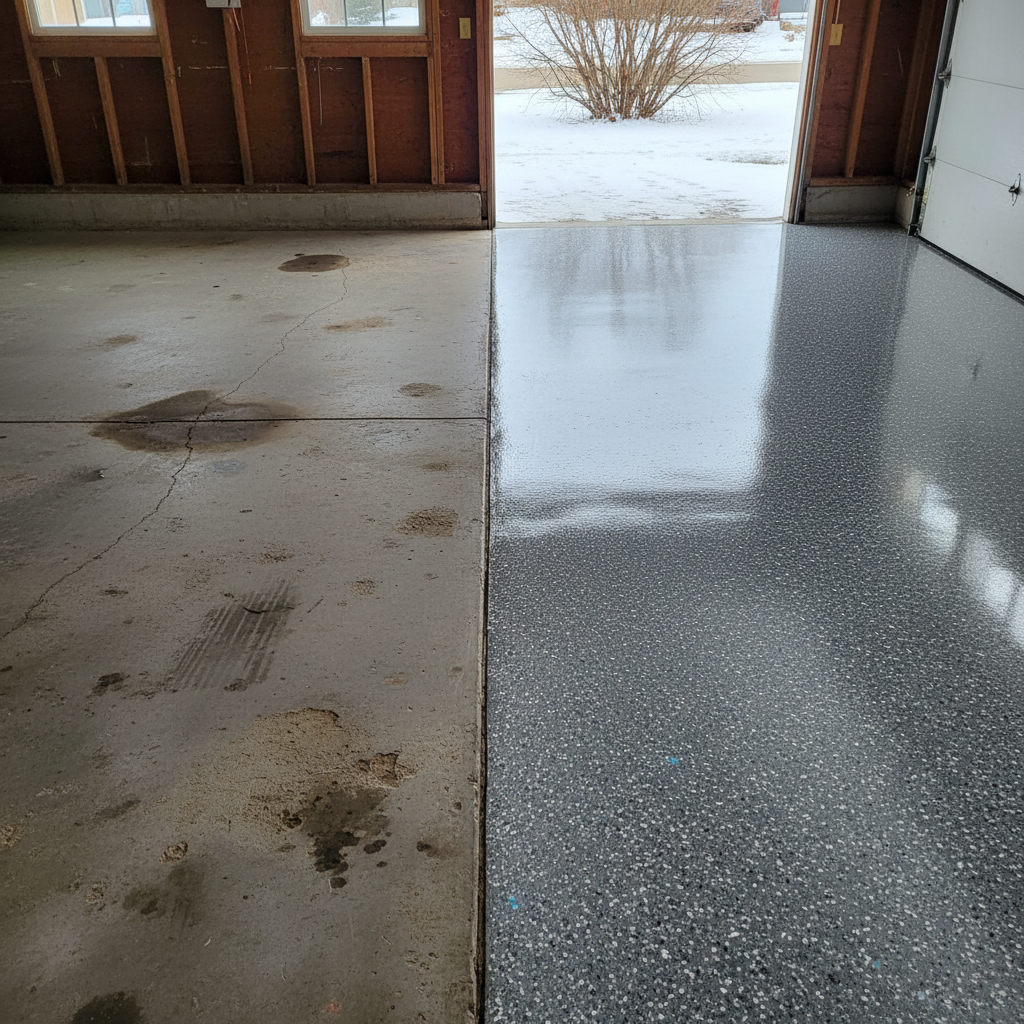
Choosing the right coating for your garage slab comes down to how well it handles our harsh northern winters here in Duluth, MN. Up here near Lake Superior, your concrete deals with freezing temperatures, heavy snow loads, and endless amounts of corrosive road salt tracked in on your tires every single day. If you are upgrading your garage floor, you have likely narrowed your options down to two main contenders: traditional epoxy or a polyaspartic system. Alpha Concrete Coatings will look at how they actually stack up against each other in real-world conditions.
Cost is usually the first thing homeowners ask about, and traditional epoxy wins the upfront price battle. DIY epoxy kits or budget contractor applications will cost less out of the pocket initially. Polyaspartic systems require professional application equipment, specialized chemical knowledge, and carry a higher initial price tag. But upfront cost only tells half the story, especially when you factor in how our local climate stresses building materials over time.
Durability is where the differences become glaringly obvious. Traditional epoxy is a thick, rigid resin. While it looks great when first laid down, it does not flex well when our Duluth clay soils shift during spring thaw cycles, which can lead to cracking or delamination. Epoxy is also prone to yellowing under UV exposure and can suffer from hot tire pickup, where warm tires pull the coating right off the concrete after a drive down I-35. Polyaspartic coatings, on the other hand, are chemically engineered to be flexible. They handle thermal shock, resist hot tire peel completely, and will not fade or yellow when the summer sun beats through your garage windows.
Maintenance on a properly coated floor is easy compared to bare, pitted concrete. Both options give you a smooth, non-porous surface that stops salt brine and automotive fluids from soaking into the slab. You can easily squeegee out melting snow slush during January without worrying about water freezing inside the pores of your concrete and causing it to spall and flake apart. However, polyaspartic offers superior chemical resistance against harsh solvents and de-icing salts, meaning it keeps its high-gloss look much longer with zero waxing or special upkeep.
Appearance-wise, both options can accommodate decorative vinyl flakes, metallic finishes, or solid colors to transform a dingy garage into a clean workspace. Epoxy tends to take days to fully cure and off-gas, which is difficult if you are trying to schedule a project around unpredictable Northland weather. Polyaspartic cures in just a few hours, allowing installers to complete the entire Floor Refinishing Service transformation in a single day and getting you back on your floor by the next morning.
Alpha Concrete Coatings has seen how local weather destroys cheap shortcuts. If you want a floor that survives heavy winter abuse, resists shifting temperatures, and will not peel under hot tires, skip the basic DIY epoxy route. Investing in a high-performance polyaspartic system provides the long-term reliability your Duluth garage actually needs.