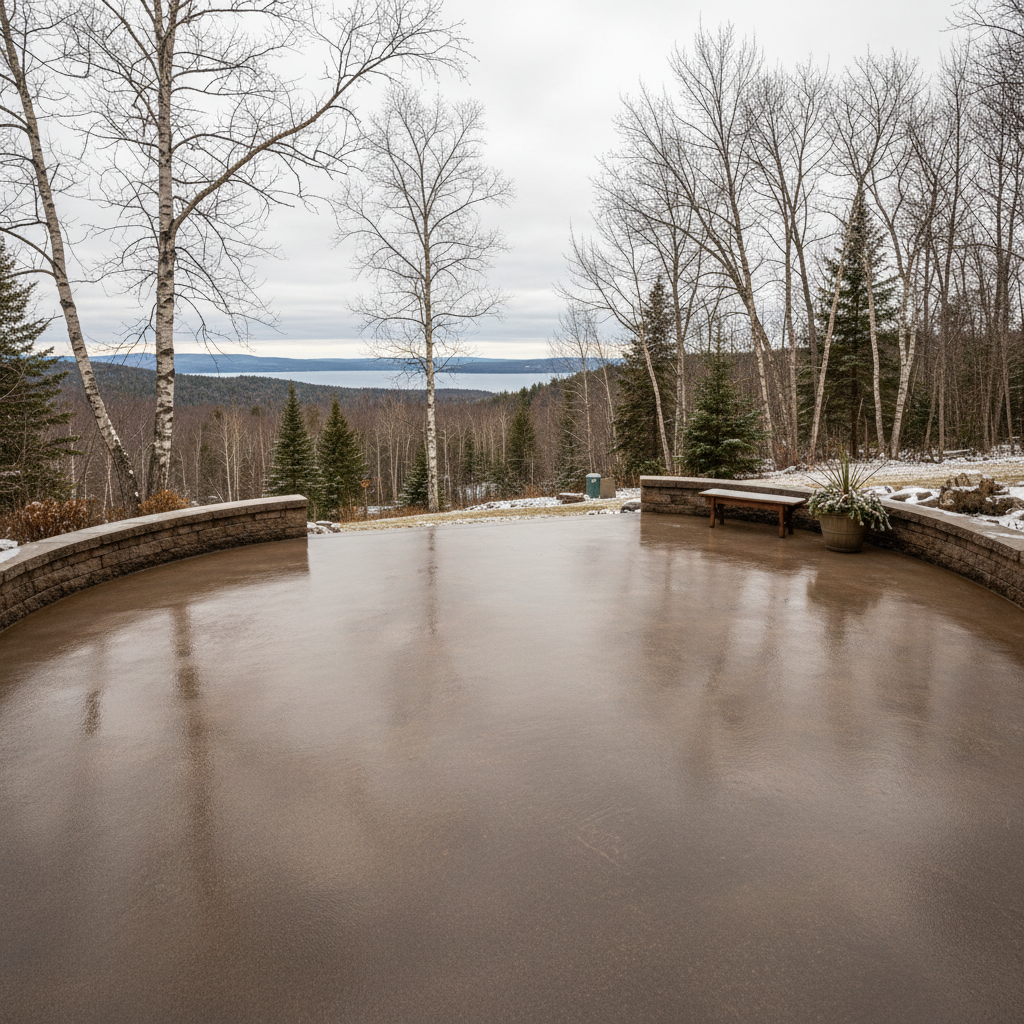
When's the best time to get your concrete floors coated here in Duluth? That's a question I hear a lot, and it's a good one. It's not as simple as picking a sunny day, you know. Our climate, with its wild swings from deep freezes to humid summers, really dictates how well a coating cures and how long it lasts.
Why Duluth Weather Matters for Concrete Coatings
You know how it is up here. One day it's 70 and sunny, the next it's 40 and raining—or worse, snowing in April. That kind of unpredictable weather isn't just a pain for your commute; it's a big deal for concrete work. For a high-quality polyurea or epoxy coating to really bond and cure properly, you need specific conditions. Temperature and humidity are the two biggest factors, by far.
If it's too cold, the coating won't cure right. It'll stay tacky, or it'll cure too slowly and never hit its full strength. If it's too hot, it can flash cure, meaning it dries on the surface too fast, trapping solvents underneath or not allowing for proper adhesion. And humidity? High humidity can cause blushing or mess with the chemical reaction, leading to a weaker, less durable finish. We've seen it all, especially in those old Lakeside garages where the moisture just seems to seep in from everywhere.
Optimal Scheduling: When to Seal Your Concrete
So, when is the best time? Generally, we aim for spring and fall. These seasons usually offer that sweet spot of moderate temperatures and lower humidity. Think late April through June, and then September through October.
- Spring (April - June): The ground's thawed, the snow's gone, and temperatures are usually climbing steadily. This is a great window. The concrete has had a chance to dry out from winter moisture, and we're not battling extreme heat or humidity yet.
- Summer (July - August): We can still do coatings in the summer, but it requires more careful planning. We're watching humidity levels closely and often starting earlier in the day to beat the afternoon heat. If you've got a garage that bakes in the sun, we might recommend doing the work on a cooler, overcast day.
- Fall (September - October): Another prime window. The heat of summer has passed, and we usually get a good stretch of crisp, dry days. This allows for excellent curing conditions before the deep freeze sets in.
- Winter (November - March): This is tough for unheated spaces like garages or outdoor patios. The concrete needs to be above a certain temperature, usually around 40-50°F, for the material to stick and cure correctly. If you have a heated space, like a basement or an insulated garage with a heater, winter can work, but we do less exterior or unheated interior work then.
Protecting Your Investment Year-Round
Once you've got that beautiful, durable coating from Alpha Concrete Coatings, you'll want to keep it looking great. Here's how:
- Clean Regularly: A simple sweep and mop with a mild cleaner (nothing too harsh or acidic) is usually all it takes. For garage floors, especially after a Duluth winter, get that road salt and grime off. It won't damage the coating, but it'll make it look dull.
- Watch for Spills: Our coatings are highly resistant to oil, gas, and chemicals, but it's always best to clean up spills quickly. This prevents staining and keeps your floor pristine.
- Avoid Dragging Heavy, Sharp Objects: Our coatings are tough, but they're not indestructible. If you're moving a workbench or a heavy appliance, lift it or use furniture sliders. Dragging sharp metal can scratch even the toughest surfaces.
- Mind the Freeze-Thaw Cycle (Even After Coating): While the coating protects your concrete from moisture penetration, it's still good practice to manage water. Make sure your gutters are working, and water isn't pooling near your garage door. The less moisture around, the better for your entire concrete slab, not just the coating.
- Re-Seal if Needed: Depending on traffic and wear, some coatings might benefit from a topcoat after many years. We use high-quality, long-lasting materials, but nothing lasts forever without some care. If you notice any dulling or wear, give us a call.
Ultimately, a good concrete coating is an investment. Timing it right with our local weather patterns, and then taking a few simple steps to maintain it, will ensure it looks fantastic and performs for years to come. Don't hesitate to reach out if you've got questions about your specific project.